


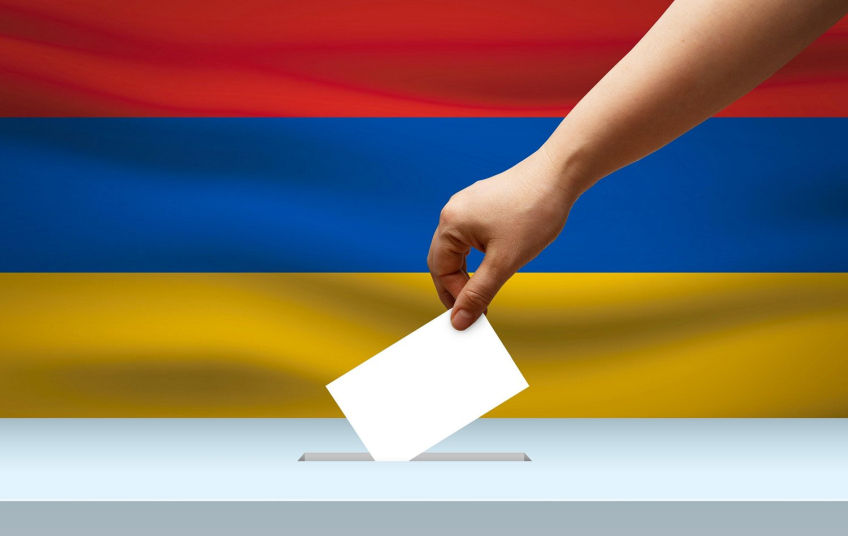

Yesterday marked the conclusion of the month-long parliamentary election campaign, which began on May 8. Today, June 6, is thankfully the official “day of silence,” during which all election campaigning is prohibited. Accordingly, “Hayatsk Yerevanits” Journal will strive to maintain political neutrality in today's coverage. The silence period will remain in effect until 8:00 p.m. on election day. Early Sunday morning, all 2,008 polling stations across Armenia will open their doors to nearly two and a half million eligible voters. We hope that the voting process will proceed smoothly, peacefully, and without any regrettable incidents.
In the lead-up to the elections, the research and consulting company EMPIRICA LLC conducted a public opinion survey. According to its findings, a highly competitive race had emerged between businessman Samvel Karapetyan and prime minister Nikol Pashinyan. Nationwide, support for the two figures was virtually tied: in direct-choice scenarios, Karapetyan received 35 percent support, while Pashinyan stood at 34 percent. In Yerevan, however, Karapetyan enjoyed a more substantial lead, with 49 percent support compared to Pashinyan’s 24 percent.
The survey also revealed a high level of public dissatisfaction with the Armenian government. Seventy-five percent of respondents in Yerevan and 61 percent nationwide rated Pashinyan’s performance negatively. Combined with the noticeable rise in support for the main opposition forces, also recorded in EMPIRICA’s research, these findings suggest a clear preference for the non-government camp, or, in Pashinyan’s preferred terminology, the “three-headed opposition alliance.” In this context, the conduct of the competing sides during the campaign is no less important than the polling numbers themselves.
During opposition campaign events, average voters were introduced to concrete policy proposals, approaches, and visions for the country’s future, all within a generally warm and positive atmosphere. By contrast, meetings organized by the ruling camp often featured displays of behavior unbecoming of a senior statesman: outbursts of anger, a lack of self-restraint, personal insults directed at citizens, and other scenes that many observers perceived as signs of emotional instability. In one case, voters returned home satisfied, having received answers to their questions; in the other, many left disappointed, frustrated, and regretting the time and energy they had invested. All of this will undoubtedly influence the final election outcome.
In that sense, tomorrow’s vote carries profound significance. It concerns the future of Armenia at a time when the country faces serious challenges, and therefore the value of every vote is exceptionally high. No vote should be wasted or cast aside carelessly. Every “wrong” vote will be like a stone removed from the foundation of Armenian statehood. Staying home on June 7 would amount to abandoning one’s civic duty, nothing less than an act of desertion. An understanding of the importance of every citizen’s participation in the electoral process must serve as a guiding principle and a civic imperative. Through their vote, each citizen earns the right and dignity of having a state and helps break the vicious chain that threatens the destruction of the nation.
The current parliamentary elections carry a greater responsibility and have a greater mission than ever before. Having experienced the pain and bitterness of defeat, the country is in urgent need of new leadership, fresh ideas, and effective solutions. The time has come to close the chapter of humiliation, defeats and setbacks together and to move forward with a renewed Armenian national agenda. June 7 is a day of responsibility for all of us and for each of us individually. In times such as these, choosing not to vote is more than mere indifference, it is a betrayal of one’s responsibility to the nation. Whoever stays home on that day risks being seen as a traitor to the national cause.
“Hayatsk Yerevanits” Journal