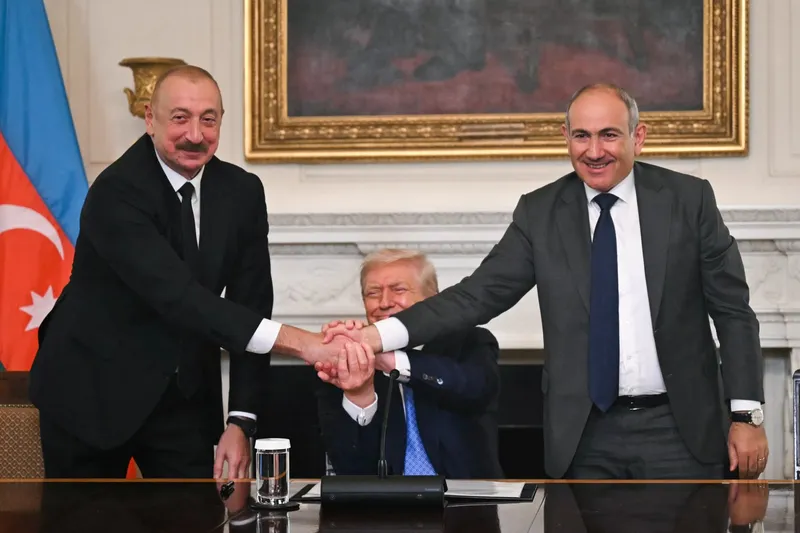
Many people in Armenia still sincerely hope that the adoption of a new Constitution will make it possible to sign the Agreement on Establishment of Peace and Inter-State Relations between the Republic of Armenia and the Republic of Azerbaijan, initialed in Washington on August 8, 2025. It seems that this is where many people’s interest in the referendum on constitutional reform ends.
The head of government himself emphasizes precisely this value of the Constitution: a Constitution for the sake of peace. It is difficult to say whether this initiative of the Armenian authorities has any actual connection with peace or war. Armenian opposition figures stay silent when they disagree with such assertions. And the essence of their resistance to the government’s policies remains unclear.
Senior Azerbaijani officials repeatedly declare that Armenia misunderstands the essence of the 17 conditions put forward by Azerbaijan in the document initialed in Washington: it is not a peace treaty but a framework agreement setting out the terms for possible future peace negotiations with Armenia. In other words, this is merely an attempt to secure Armenia’s de facto recognition of the legitimacy of Azerbaijan’s policies pursued since 2020.
The Armenian authorities pretend to ignore Azerbaijan’s warnings. They insist that Azerbaijan is making these statements for the international community rather than addressing Armenia. Many citizens who hear such statements are not particularly concerned about the situation described. They are indifferent, as long as there is no war. They have become convinced that war is inevitable if the Constitution is not amended.
Everything seems unbelievably simple. Couldn’t Armenia’s acceptance of the legitimacy of Azerbaijan’s policies since 2020 itself become the cause of a new war, an idea beyond the comprehension of someone with average intelligence? In Armenia, the path to a peaceful life has always been perceived as one of renouncing one’s rights, while the defence of those rights is increasingly regarded as a threat of war. For more than a century, people have been persuaded that all the national problems of Armenians stem from unfounded demands against others. Such claims are evident in every sovereign decision of the Armenian people. The notion that others’ opinions must be taken into account is instilled in the people's psyche, particularly when it comes to building our own state. They justify themselves by claiming that deciding how that state should be built is not within their power.
And many are simply too lazy to dispute such assertions.