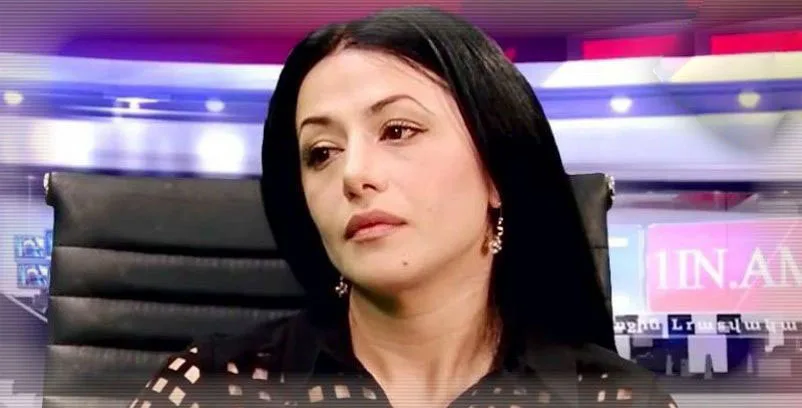
Interview with Armine Ghazaryan, expert at the Armenian Center for National and International Studies, psychologist
– What is the situation in Armenia today, what conclusions have you drawn from the results of the Yerevan Council of Elders elections, and what united people around the force presented by Nikol Pashinyan?
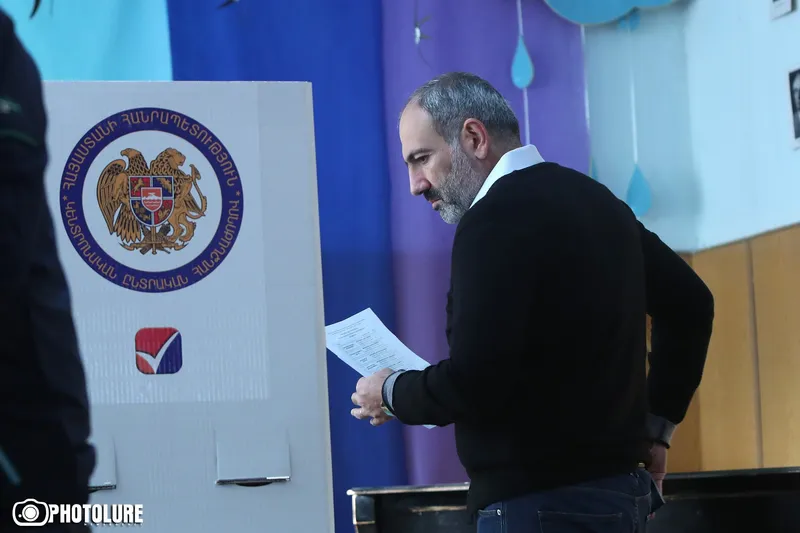
– Today the situation in Armenia is the same as every day after April 23; I do not say after the revolution, because it is still ongoing. September 23 was also registered as a most important "revolutionary" day associated with the fair and calm elections known to us all. From the results of the mayoral election, it is clear that the citizens, the public, went on the 23rd to reinforce what had been done and to materialize it, rather than to choose a mayor.
In fact, we witnessed how 12 parties or blocs were carrying out an election campaign, while people heard only one message: the reinforcement of the revolution. Everything else—garbage and energy, elevators and transport—they pushed aside. The people remained indifferent to the campaign aimed at solving urban problems.
To summarize figuratively: the people said, take it and work calmly in our name. This indicator of legitimacy was more than necessary for the Prime Minister abroad. And that segment remaining from the old authorities, which points out a survival of the Greek period of decision-making in the square, will fall silent.
– Are society and political forces psychologically ready for snap parliamentary elections?
– Just as the mayoral elections tended to strengthen the Prime Minister’s position, they also exposed the active, inactive, existing, and non-existing resources of the parties. The picture is not rich. Great changes are needed both in the legislative field and within the institutions themselves.
But there are a number of questions that are more than concerning:
1. If snap parliamentary elections are held in the near future, in all probability we might have the same statistics, and the parties—despite their deplorable state—will remain out of the competition. Now, with the artificial escalation of post-revolutionary situations as well, every voter will approach the choice under the slogan of voting "in favor of the revolution." We might end up with another non-corresponding parliament.
2. Society is also not ready for the elections. Let me explain the psychological side of why there is a risk that the ruling party could unanimously receive even up to 90% of the votes in the parliamentary elections.
It is my observation that the citizen is still fused within the "we-whole." This election demonstrated it when the force that led the revolution garnered 80+ percent. That is, in such a situation, everyone constitutes a part of a single whole and is fused with one another to preserve their kind.
That is, there is a problem with the individual citizen; for normal elections, a fertile ideological and diverse force needs a potential participatory field where the "I" emerges from the "we." Meanwhile, for now, due to several false threats, "single-mindedness" will prevail.
According to my observations, this is the most serious challenge after the revolution.
Since the human factor is present, there are characteristics that adapt over time and become the very type against which their struggle was born. Any force that receives 80% of the vote cannot be a reflection of reality; it is merely today's situation. In fact, it turns out it will be a situational solution.
On the other hand, Armenian parties have a lot of work to do; the public's readiness must also come from the proposal, the readiness of political forces, and adequate representation.
People are no longer interested in or moved by a couple of updated platform points. People need something new, cutting-edge, and mobile. By appearing with the same composition, in the same form and role, even parties that have made positive and major contributions are perceived in people's subconscious as the forces that lost during Serzh Sargsyan's era. Enormous and sincere qualitative work is required.
It is not a matter of assessing "good" and "bad"; parties must understand this. Perhaps they should step back well-known faces, even former political prisoners whose merits no one doubts, but to fit into the dictates of the times, one must be mobile, new, and open. Currently, there is no competitive party either ideologically or in terms of qualitative replenishment.
– What opinion do you have about the impact of the domestic and foreign policy conducted by Nikol Pashinyan?
– The challenges, both domestic and foreign, are numerous; keeping the path and principles is essential. There is a question of priorities, both internal and external. What we are going through now already has precedents in history, especially in countries of regions that, like us, are surrounded by unfriendly countries and whose interests conflict. One can observe the diplomacy of those countries, as well as the working style of their leaders in international instances so far.
The same applies to domestic policy through economic development: the people must feel a difference in their quality of life and trust the systems. However intuitively resilient they are to slow changes, they cannot tolerate it for long.
In domestic policy, there is a constant need for vigilance, especially regarding party recruitment. That is such a serious issue that "structures" collapse because of it, even a structure like the KGB, when they assumed that every good communist was a good Chekist and placed communists in the services. For instance, not every Civil Contract member is the best choice for positions that may require serious professionalism.
In the external arena, I would like to highlight a very important gesture by Pashinyan when he sent a message to the President of Azerbaijan to also send his son to the frontline at the border as a guarantee of peace. This is a subtle factor that can be worked on seriously, as it will lead to internal "discussions" within the adversary's society, among soldiers' families, and there could be internal pressure to maintain the ceasefire. I believe this strategy should be developed very seriously and consistently.
– What opinion do you have about the developments unfolding around Robert Kocharyan— charges of overthrowing the constitutional order, statements about his return to politics— what situation is he in, and what can all this lead to?
– What is being said about Robert Kocharyan is already several times more than it could be. But it is understandable: by the law of reaction, people do not calm down after what they lived through during the years of his rule. That is why they react to and discuss his every step and statement.
First, regarding his statements: he pulled a simple bluff. When charges were brought against him and he gave an interview on "Yerkir Media" saying, "I am returning to politics," for some reason everyone swallowed that simple bait. He was not returning to any politics. The proof of that was his unpreparedness as a political figure; even in terms of political language and mindset, roughly speaking, he was in a rather "rusty" state and, especially for him, it was ill-timed.
He understands very well that politics is the last place he should enter; at least he himself knows the quality of his activity.
He does not have the human, quantitative, or qualitative resources to organize or rally around himself; no matter how much it seems that the RPA is looking for a master, again we must not forget the factor of the people.
In short, since he was already faced with a fact, he tried to use that bluff, which worked, and to this day they exploit it out of nowhere.
As for what situation he is in, his formulations are very interesting and telling. In his second-to-last interview, it seemed that instead of legal terms he used moral-ethical descriptions, referring to conscience, such as "these people have no conscience," "an impasse," "I urge"—these are much more informative terms than mere words.
He will try to the end to maintain the relevance of his political persona on one issue or another, to appear in the news, to have his name brought up; he will work to genuinely try to show some "activity," which in reality are the last possible efforts.
In general, the current messy state of the political field does not allow us to see that certain forces and figures actually have no role or significance, but continue to be dragged out out of inertia.
– What advice would you give to the current authorities of the Republic of Armenia?
– Information and knowledge are the most valuable assets of all time. Today the opportunities to acquire them are numerous and fairly open; the wise person takes them.
Interview conducted by Gayane Khachatryan
AI translation · Կարդալ բնօրինակը (ՀԱՅ)