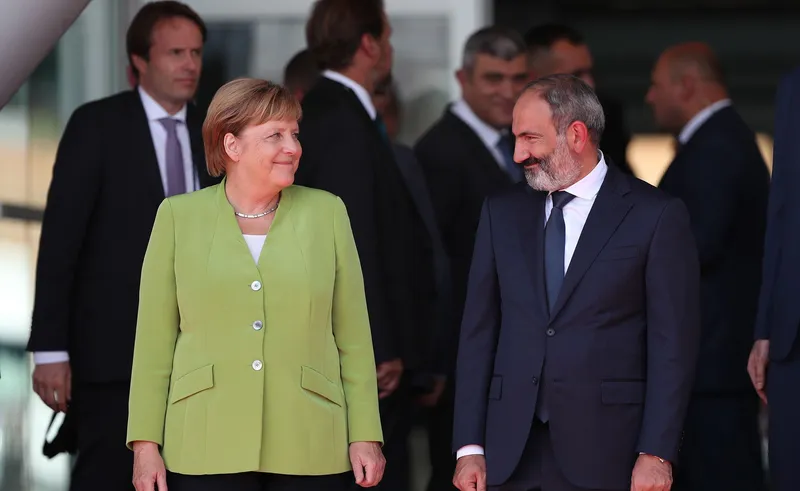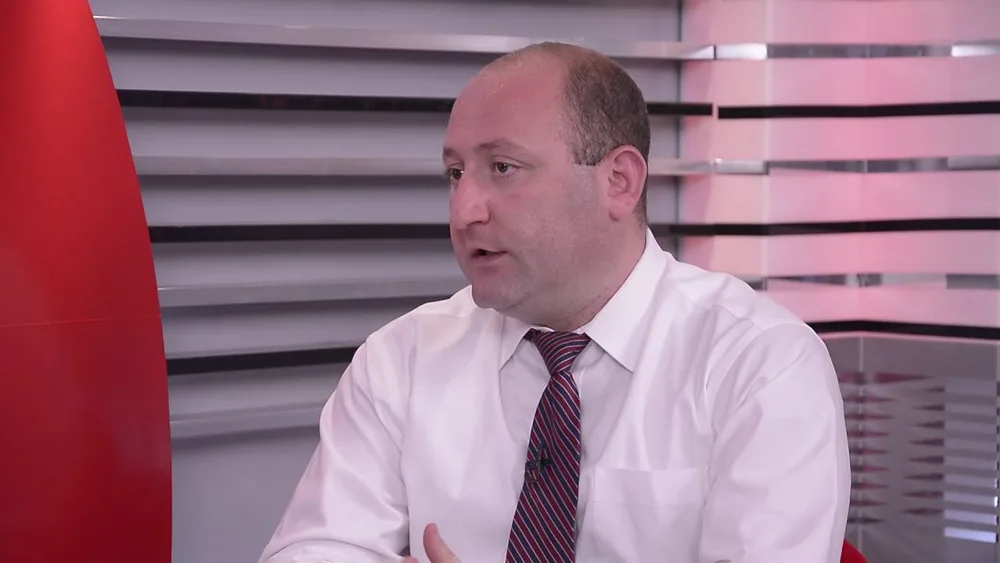
Chancellor of the Federal Republic of Germany Angela Merkel arrived in Armenia on an official visit on August 24-25 within the framework of her visit to the region. Merkel held meetings and discussions with the highest leadership of the Republic of Armenia, laid flowers at the Tsitsernakaberd memorial complex, honoring the memory of the victims of the Armenian Genocide. "Hayatsk" spoke with political scientist Suren Sargsyan about Angela Merkel's visit, Armenia's international role, and other agenda issues.
- Mr. Sargsyan, by tradition, official visits are considered successful when agreements are signed. During Merkel's visit, no document regarding bilateral relations was signed, yet it seems the Chancellor left Armenia satisfied. Can this be considered progress on the path to deepening relations and a foundation for developing future cooperation?
- I do not remember an official who left Armenia dissatisfied. As for the document signing process, major financial documents regarding assistance and investments were signed in Georgia, a document was also signed in Azerbaijan, whereas in Armenia, essentially nothing was signed. The Armenian visit, one could say, was the lightest part of Angela Merkel's trip to the region; it stood out mostly for its PR component. Here, Merkel had the opportunity to go out onto the street, interact with people; the emphases of her visit were mostly like that. There were also no serious political statements made in Armenia. Merkel did not make a statement regarding the recognition of the Armenian Genocide, and regarding Artsakh, Germany repeated the stance of the Minsk Group Co-Chairs. The regional visit was important and exceptional because a visit of such a level had never happened before, but for Merkel, the Armenian segment of the visit mostly contained certain PR components.
- Angela Merkel did not pronounce the word genocide. Nevertheless, do you consider visiting Tsitsernakaberd and paying tribute to be progress on the path toward recognition of the genocide by Germany?
- I do not consider it progress, because all guests coming to Armenia, according to our country's protocol, visit Tsitsernakaberd and pay tribute to the memory of the victims of the Armenian Genocide. In many cases, officials of states even set a precondition that they will not make any statements at Tsitsernakaberd. In this regard, there is no progress; this is an integral part of Armenia's protocol.
- Are such high-level visits connected with the recent rise in Armenia's international standing?
- High-level visits have always been and will continue to be in Armenia. Leaders, foreign ministers, speakers of parliaments of various powers, including superpowers, have been to Armenia, meaning the visit of the Chancellor of Germany was not exceptional in this regard, because leaders of both Russia, France, and other powers have been to Armenia. As for Armenia's international standing, it is natural that if democratic processes are taking place in a country, the civilized and advanced world responds adequately to that. In this sense, if Armenia is able to shape a perception of a democratic state in the civilized world, then, of course, this has a positive impact on its standing.
- Azerbaijan had denied an entry visa to a member of the German delegation, a deputy of the German Bundestag. Chancellor Angela Merkel resolved the issue by replacing that official with another to maintain peace and stability in the region. Will Azerbaijan not use the retreat of a superpower like Germany to reinforce its bellicose rhetoric?
- Azerbaijan has always come forward with bellicose statements. It has conducted such a policy and will continue to do so regardless of any kind of visits, resolutions, criticism, or calls from the international community, organizations, and states. That is to say, the world on one side, Azerbaijan's actions on the other. I do not remember an instance where, due to any statement or resolution, Azerbaijan changed the tone of its bellicose statements and aggressive behavior. Such steps have no consequence or impact on Azerbaijan's aggressive policy.
The interview was conducted by Norayr Shoghikyan
AI translation · Կարդալ բնօրինակը (ՀԱՅ)